


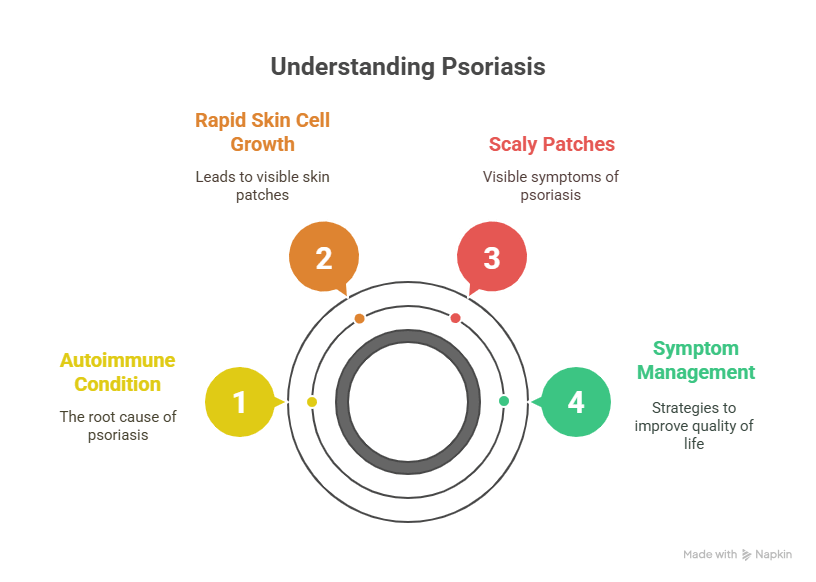
Psoriasis is a chronic autoimmune condition that results in the rapid growth of skin cells, forming red, scaly patches that can be painful and unsightly. For those living with this condition, the ultimate question is “How to cure psoriasis completely?” While psoriasis is a long-term condition with no definitive cure, there are several ways to manage and reduce its symptoms effectively. In this blog, we’ll discuss the various effective treatments and tips that can help cure psoriasis completely or at least significantly improve the quality of life for individuals suffering from this condition. We’ll also explore the importance of Skin Psoriasis Treatment in Ludhiana and how professional dermatologists can guide you in managing your psoriasis effectively.
What Is Psoriasis?
Psoriasis is a chronic skin disorder that causes the skin cells to multiply too quickly, leading to the formation of raised, red, scaly patches. These patches often appear on the scalp, elbows, knees, and lower back, but they can occur anywhere on the body. Psoriasis is an autoimmune condition, meaning that it results from an overactive immune system that mistakenly attacks healthy skin cells.
While there is no cure for psoriasis, the goal of treatment is to reduce symptoms, prevent flare-ups, and improve the patient’s quality of life. How to cure psoriasis completely may not be possible for everyone, but with the right approach, the symptoms can be managed effectively.
Types of Psoriasis
Before discussing how to cure psoriasis completely, it’s important to understand the different types of psoriasis. The treatment options can vary based on the type of psoriasis a person has.
- Plaque Psoriasis:
- The most common type, characterized by raised, red patches covered with silvery scales. It usually appears on the elbows, knees, and scalp.
- The most common type, characterized by raised, red patches covered with silvery scales. It usually appears on the elbows, knees, and scalp.
- Guttate Psoriasis:
- This type of psoriasis is marked by small, drop-shaped lesions that appear on the trunk, arms, or legs. It is often triggered by infections, particularly strep throat.
- This type of psoriasis is marked by small, drop-shaped lesions that appear on the trunk, arms, or legs. It is often triggered by infections, particularly strep throat.
- Inverse Psoriasis:
- This type affects skin folds, such as the armpits, groin, or under the breasts. It appears as smooth, red patches and is often aggravated by sweating.
- This type affects skin folds, such as the armpits, groin, or under the breasts. It appears as smooth, red patches and is often aggravated by sweating.
- Pustular Psoriasis:
- This rare form of psoriasis causes white pustules (blisters of noninfectious pus) surrounded by red skin. It can occur on specific parts of the body, including the hands and feet.
- This rare form of psoriasis causes white pustules (blisters of noninfectious pus) surrounded by red skin. It can occur on specific parts of the body, including the hands and feet.
- Erythrodermic Psoriasis:
- The most severe form, erythrodermic psoriasis, causes widespread redness and shedding of the skin, which can lead to serious complications and requires immediate medical attention.
- The most severe form, erythrodermic psoriasis, causes widespread redness and shedding of the skin, which can lead to serious complications and requires immediate medical attention.
How to Cure Psoriasis Completely: Effective Treatments
While psoriasis cannot be completely cured for everyone, the good news is that there are many effective treatments available to manage and even achieve long-term remission for some individuals. Here’s a breakdown of the most common and effective treatment options for how to cure psoriasis completely:
1. Topical Treatments
Topical treatments are often the first line of defense for managing psoriasis. These are applied directly to the skin to reduce inflammation, slow the rapid growth of skin cells, and alleviate symptoms like itching and redness.
- Topical Corticosteroids: These are the most commonly prescribed treatment for psoriasis and are available in various strengths. They work by reducing inflammation and slowing the production of skin cells. However, long-term use of steroids can lead to thinning of the skin, so they should be used under the guidance of a dermatologist.
- Vitamin D Analogues: These are used to regulate skin cell production. Topical vitamin D analogues, such as calcipotriene, can help reduce plaque formation and inflammation.
- Coal Tar: Coal tar is a traditional treatment for psoriasis that reduces scaling, inflammation, and itching. It can be applied in ointment or shampoo form.
- Topical Calcineurin Inhibitors: These are non-steroidal medications that help reduce inflammation and are often used in sensitive areas such as the face and genital areas.
2. Phototherapy (Light Therapy)
Phototherapy is a highly effective treatment for moderate to severe psoriasis. It involves exposing the skin to controlled amounts of ultraviolet (UV) light to slow the growth of skin cells. Phototherapy is usually performed in a dermatology office under professional supervision.
- UVB Therapy: Narrowband UVB therapy is the most commonly used form of light therapy for psoriasis. It involves exposing the skin to ultraviolet light to slow the production of skin cells and reduce inflammation.
- PUVA Therapy: This type of therapy combines ultraviolet A (UVA) light with a drug called psoralen, which makes the skin more sensitive to the light.
Phototherapy is a safe and effective option for many individuals and can result in long-term remission, especially when combined with topical treatments.
3. Systemic Treatments
Systemic treatments are used for individuals with moderate to severe psoriasis or those whose condition does not respond well to topical treatments. These treatments affect the entire body and help regulate the immune system’s activity to reduce inflammation and skin cell turnover.
- Oral Medications: Medications like methotrexate, cyclosporine, and acitretin can help control severe psoriasis by suppressing the immune system and reducing skin cell turnover.
- Biologic Therapy: Biologics are a newer class of medications that target specific parts of the immune system responsible for psoriasis. These are typically used for moderate to severe psoriasis that does not respond to other treatments. Biologics are administered through injections and are proven to provide long-lasting relief.
4. Lifestyle Changes
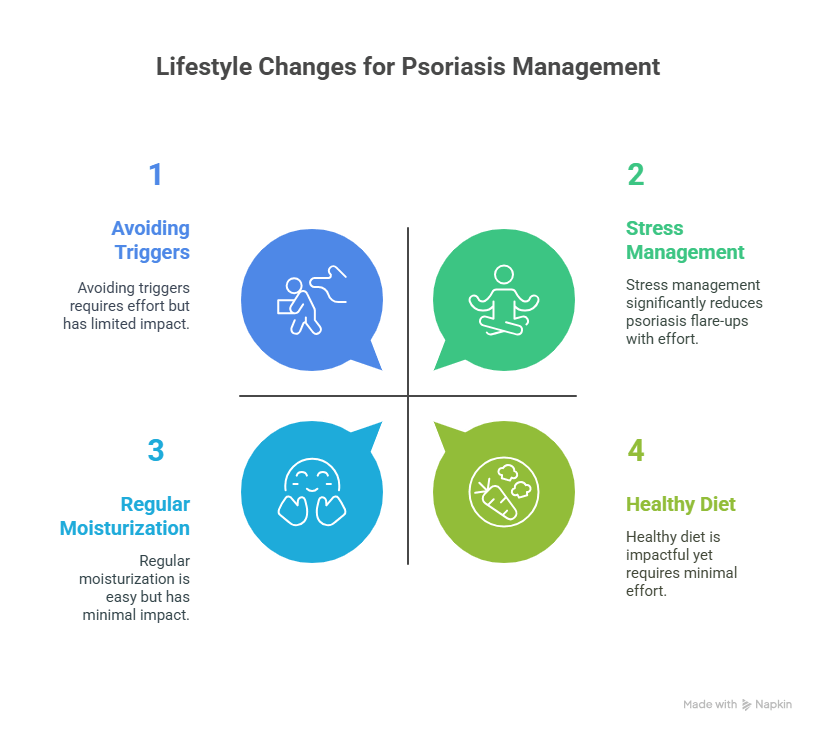
In addition to medical treatments, lifestyle changes play a critical role in managing psoriasis. Certain triggers, such as stress, smoking, and alcohol consumption, can worsen psoriasis symptoms. By making some lifestyle adjustments, you can reduce the frequency of flare-ups and improve your skin health.
- Avoiding Triggers: Identify and avoid environmental triggers such as harsh weather, certain medications, and infections. Stress is also a major trigger for psoriasis flare-ups, so practicing relaxation techniques like meditation and yoga can be beneficial.
- Diet: A healthy diet rich in antioxidants, omega-3 fatty acids, and vitamins can help improve skin health. Foods like fatty fish (salmon, mackerel), leafy greens, and fruits like berries and oranges can help reduce inflammation.
- Moisturization: Keeping the skin hydrated is essential for individuals with psoriasis. Using a high-quality moisturizer regularly can help soothe dry, itchy skin and prevent cracking.
5. Alternative Therapies
Some people with psoriasis turn to alternative therapies, such as acupuncture, herbal treatments, or supplements, for relief. While there is limited scientific evidence supporting these treatments, some individuals find them beneficial for managing symptoms. Always consult with a dermatologist before trying alternative therapies to ensure they won’t interfere with your ongoing treatments.
Skin Psoriasis Treatment in Ludhiana: Professional Guidance
If you’re struggling with psoriasis and wondering how to cure psoriasis completely, it’s important to consult a professional dermatologist who can guide you through the most effective treatments. Skin Psoriasis Treatment in Ludhiana is available at The House of Skin, where we offer advanced solutions tailored to your specific condition.
Our team of experienced dermatologists is skilled in treating all forms of psoriasis and can create a personalized treatment plan that combines topical treatments, light therapy, systemic medications, and lifestyle recommendations to help you manage your condition effectively.
We also provide ongoing support, ensuring that you receive the best care and that your treatment plan evolves as your skin condition improves.
Conclusion: How to Cure Psoriasis Completely
How to cure psoriasis completely is a complex question, as psoriasis is a chronic condition that cannot always be cured for everyone. However, with the right combination of treatments, lifestyle adjustments, and medical care, psoriasis symptoms can be significantly reduced, and long-term remission can be achieved.
Whether you choose topical treatments, phototherapy, systemic medications, or a combination of these, it’s essential to work closely with a dermatologist to find the right solution for your skin. Skin Psoriasis Treatment in Ludhiana is available at The House of Skin, where we specialize in treating psoriasis and helping our patients lead comfortable, healthy lives.

