


Melasma and hyperpigmentation are two common skin conditions that cause dark patches or spots on the skin. While they may seem similar, understanding the difference between melasma vs hyperpigmentation is crucial for selecting the right treatment and achieving clearer, more even-toned skin. In this blog, we will explore the causes, symptoms, and treatments for both conditions, along with expert insights on how to manage them effectively. We’ll also discuss how Melasma Treatment in Ludhiana can help those struggling with this condition achieve their skin goals.
What Is Melasma?
Melasma is a type of skin hyperpigmentation that typically appears as dark, irregularly shaped patches on the skin. It is most commonly seen on the face, particularly on the cheeks, forehead, upper lip, and chin. This condition is often linked to hormonal changes and is more prevalent in women, especially during pregnancy or while using birth control pills.
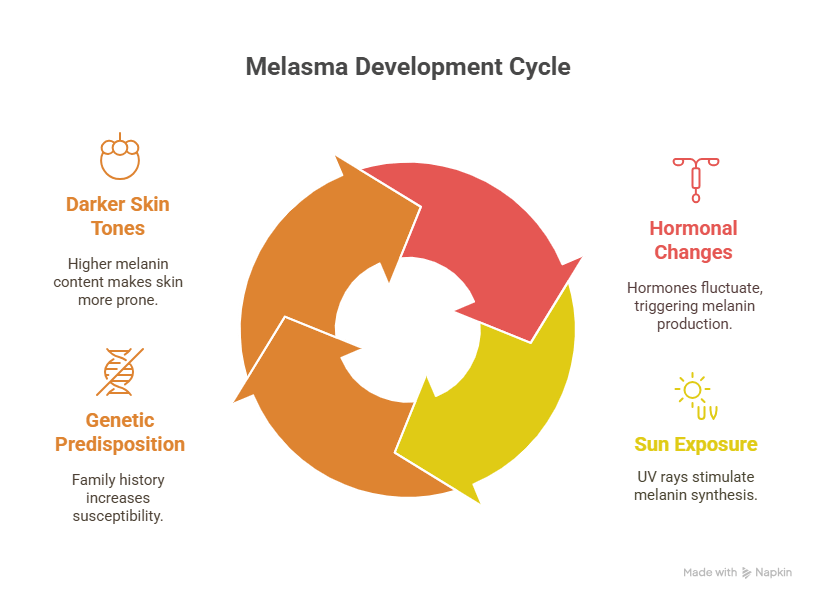
Causes of Melasma:
- Hormonal Changes: The most common cause of melasma is hormonal changes, often triggered by pregnancy (referred to as the “mask of pregnancy”), birth control pills, or hormone replacement therapy.
- Sun Exposure: Exposure to the sun is another key trigger, as UV rays can stimulate melanin production, darkening the skin.
- Genetic Factors: People with a family history of melasma are more likely to develop this condition.
- Skin Type: Those with darker skin tones are more prone to melasma due to their higher melanin content.
Symptoms of Melasma:
- Brown or grayish-brown patches on the skin, typically on the face.
- Uneven, irregular patches with well-defined borders.
- Skin appears darker when exposed to sunlight or artificial light.
While melasma is not harmful, it can cause cosmetic concerns, affecting one’s confidence and self-esteem.
What Is Hyperpigmentation?
Hyperpigmentation refers to the darkening of the skin caused by excess melanin production. Unlike melasma, hyperpigmentation can occur anywhere on the body and is not limited to the face. It manifests as dark spots or patches on the skin and can vary in size and shape.
Causes of Hyperpigmentation:
- Sun Exposure: UV rays from the sun stimulate the production of melanin, leading to dark spots, freckles, or sunspots.
- Post-Inflammatory Hyperpigmentation (PIH): This type of hyperpigmentation occurs after the skin experiences an injury, irritation, or inflammation, such as acne, eczema, or burns. PIH often appears as dark spots or scars in the area of healed wounds.
- Medications: Some medications, such as certain antibiotics or hormone treatments, can increase the risk of hyperpigmentation.
- Pregnancy: Hormonal fluctuations during pregnancy can cause melasma, a form of hyperpigmentation.
- Age: As people age, the risk of developing age spots (also called liver spots or solar lentigines) increases, especially due to prolonged sun exposure.
Symptoms of Hyperpigmentation:
- Darkened skin patches or spots that are often more pronounced after sun exposure.
- Spots may be irregular in shape and size and can appear anywhere on the body.
- In some cases, the patches may become more noticeable over time.
Melasma vs Hyperpigmentation: Key Differences
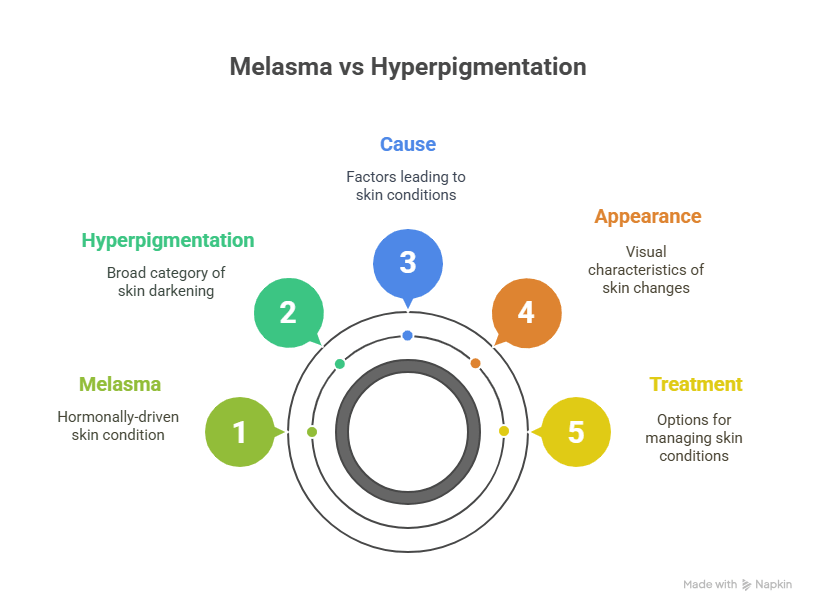
While both melasma and hyperpigmentation involve excess melanin production, there are key differences in their causes, appearance, and treatment options. Understanding these differences can help determine melasma vs hyperpigmentation and allow for more targeted treatment.
| Factor | Melasma | Hyperpigmentation |
| Cause | Primarily hormonal changes (e.g., pregnancy, birth control) | Sun exposure, post-inflammatory, age spots, etc. |
| Appearance | Dark, irregular patches mainly on the face | Dark spots or patches anywhere on the body |
| Common Locations | Face (cheeks, forehead, upper lip) | Anywhere on the body (including face, hands, chest) |
| Sun Sensitivity | Becomes darker with sun exposure | Becomes darker with sun exposure |
| Skin Tone | Common in people with darker skin | Affects all skin types, especially those with fair skin |
| Treatment Options | Often treated with specific melasma treatments | Can be treated with various treatments, including sunscreens and topical lightening agents |
As you can see, the differences between melasma vs hyperpigmentation lie in their specific causes and locations. Melasma is more related to hormonal changes, while hyperpigmentation can occur due to a variety of causes, from sun exposure to skin injury.
Treatment Options for Melasma and Hyperpigmentation
Whether you’re dealing with melasma vs hyperpigmentation, several treatments can help reduce the appearance of dark spots and patches. Here’s an overview of the most effective treatment options for both conditions.
1. Topical Treatments
Topical treatments are the first line of defense in treating both melasma and hyperpigmentation. These products work by inhibiting melanin production or promoting skin cell turnover to lighten dark spots.
- Hydroquinone: A potent skin lightener, hydroquinone reduces melanin production and can be used to treat both melasma and hyperpigmentation.
- Vitamin C: Vitamin C is an antioxidant that inhibits melanin production and brightens the skin.
- Niacinamide: This Vitamin B3 derivative helps brighten the skin and reduce pigmentation by blocking melanin transfer to the skin cells.
- Retinoids (Retinol): Retinoids increase cell turnover, helping to exfoliate the skin and fade dark spots over time.
- Alpha Arbutin: A gentler alternative to hydroquinone, alpha arbutin lightens skin pigmentation by inhibiting melanin production.
These products can be used as part of a daily skincare routine, and a dermatologist in Ludhiana can guide you on the best products for your skin type.
2. Chemical Peels
Chemical peels are one of the most effective treatments for melasma vs hyperpigmentation. A chemical solution is applied to the skin to exfoliate the outer layer, helping to lighten dark spots and reveal fresh, brighter skin underneath. There are different types of chemical peels, from superficial peels that treat mild pigmentation to deep peels for more stubborn pigmentation issues.
For melasma, a dermatologist in Ludhiana may recommend a series of chemical peels to gradually lighten the skin and improve tone.
3. Laser Treatments
Laser treatments are highly effective for melasma vs hyperpigmentation, particularly when topical treatments do not provide sufficient results. Lasers such as Q-switched Nd:YAG and fractional lasers target melanin in the skin and break it down, allowing the body to eliminate it naturally.
- Q-Switched Nd:YAG Laser: This laser is highly effective in treating both melasma and hyperpigmentation, especially for stubborn pigmentation that does not respond to topical treatments.
- Fractional CO2 Laser: A fractional laser creates tiny wounds in the skin, stimulating the production of collagen and promoting the regeneration of skin cells. It helps reduce pigmentation and improve skin texture.
These treatments require consultation with a dermatologist in Ludhiana to determine the right approach based on your skin type and pigmentation issues.
4. Sun Protection
Whether you are dealing with melasma or hyperpigmentation, sun protection is crucial for preventing the darkening of skin. UV exposure triggers the production of melanin, which can worsen both conditions. It is essential to use broad-spectrum sunscreen with an SPF of at least 30 daily, even when indoors or on cloudy days.
Additionally, wearing protective clothing, such as hats and sunglasses, and avoiding the sun during peak hours can help prevent further pigmentation issues.
5. Oral Medications
In some cases, oral medications such as tranexamic acid may be prescribed to treat melasma. These medications work by reducing the formation of blood vessels that can contribute to melasma.
Melasma Treatment in Ludhiana
If you’re looking for professional Melasma Treatment in Ludhiana, consult with a skilled dermatologist who can provide personalized care. A dermatologist in Ludhiana can help you determine the underlying cause of your melasma or hyperpigmentation and recommend the best treatment options tailored to your skin.
The House of Skin offers advanced treatments for both melasma and hyperpigmentation, including chemical peels, laser therapy, and topical treatments, all under the supervision of experienced dermatologists.
Conclusion: Melasma vs Hyperpigmentation
Understanding the differences between melasma vs hyperpigmentation is key to finding the right treatment. While hormonal changes primarily trigger melasma, hyperpigmentation can have a variety of causes, including sun exposure and skin injuries. Both conditions can be treated effectively with the right approach, which may include topical treatments, chemical peels, laser therapies, and sun protection.
If you’re struggling with melasma or hyperpigmentation, The House of Skin offers comprehensive treatments to help you achieve brighter, more even-toned skin. Contact us today to schedule a consultation with a dermatologist in Ludhiana and learn how to get started on your journey to clearer skin.

