


Psoriasis is a chronic autoimmune condition that leads to the rapid growth of skin cells, causing patches of red, scaly skin that can be itchy and painful. Managing psoriasis can be challenging, as the condition often fluctuates, with periods of flare-ups followed by periods of remission. If you’re wondering, “Which treatment is better for psoriasis, homeopathy or allopathy?”, you’re not alone. Many individuals with psoriasis seek the best possible approach to alleviate symptoms and manage their condition effectively. This blog will explore the differences between homeopathy vs allopathy for psoriasis, the pros and cons of each approach, and how you can choose the right treatment for your needs. We’ll also touch on Skin Psoriasis Treatment in Ludhiana and how professional dermatologists can help guide your psoriasis management journey.
Understanding Psoriasis
Psoriasis is a chronic skin disorder characterized by the rapid production of skin cells. This condition causes thick, silvery-white patches to form on the skin, typically on the scalp, elbows, knees, and lower back. The immune system’s malfunction plays a key role in psoriasis development, causing inflammation and the excessive production of skin cells. While the exact cause of psoriasis is unknown, several factors may contribute, including:
- Genetics: Psoriasis tends to run in families.
- Immune System: An overactive immune system can trigger the inflammatory response that causes psoriasis.
- Environmental Triggers: Stress, infections, cold weather, smoking, and alcohol consumption can all worsen psoriasis symptoms.
Given its chronic nature, many people with psoriasis wonder about the best treatment options. Homeopathy and allopathy (conventional medicine) both offer different approaches to managing the condition.

Homeopathy vs Allopathy for Psoriasis
When deciding which treatment is better for psoriasis, it’s important to understand the differences between homeopathy and allopathy.
Homeopathy for Psoriasis: A Natural Approach
Homeopathy is a system of alternative medicine based on the principle of “like cures like,” meaning that a substance that causes symptoms in a healthy person can help treat similar symptoms in someone who is ill. Homeopathic treatments for psoriasis are often made from natural substances that are highly diluted.
How Homeopathy Works for Psoriasis:
Homeopathic treatments are designed to treat the underlying causes of psoriasis by stimulating the body’s innate healing mechanisms. Homeopathic remedies for psoriasis focus on:
- Personalized Treatment: Homeopathy treats each person individually based on their unique symptoms, constitution, and overall health.
- Holistic Approach: Homeopathy aims to treat the body as a whole, addressing both the physical symptoms and emotional well-being of the patient.
- Chronic Management: Since psoriasis is a long-term condition, homeopathic remedies may be used to help reduce flare-ups and manage the chronic nature of the disease over time.
Benefits of Homeopathic Treatment for Psoriasis:
- Natural and Gentle: Homeopathy offers a natural approach without the use of harsh chemicals, which can be beneficial for people with sensitive skin.
- Fewer Side Effects: Homeopathic remedies are often considered safer, with fewer side effects than conventional medications.
- Long-Term Healing: Homeopathy is often preferred by those looking for a more natural, long-term solution to psoriasis management.
Common Homeopathic Remedies for Psoriasis:
- Arsenicum album: Often used for dry, scaly skin with intense itching.
- Graphites: Used for psoriasis with cracked, oozing lesions.
- Sulphur: Typically prescribed for individuals with red, inflamed patches and intense itching.
While homeopathy is often seen as a natural and gentler option for managing psoriasis, it’s important to note that scientific evidence supporting the effectiveness of homeopathic treatments for psoriasis is limited. Many homeopathic remedies require individualized prescriptions based on your symptoms, and results can vary from person to person.
Allopathy for Psoriasis: Conventional Medical Treatments
Allopathy, or conventional medicine, refers to the standard medical treatments used to manage psoriasis, including topical treatments, oral medications, and biologic therapies. Allopathic treatments focus on controlling the symptoms of psoriasis, reducing inflammation, and slowing down the rapid production of skin cells.
How Allopathy Works for Psoriasis:
Allopathic treatments aim to reduce inflammation and manage the symptoms of psoriasis. These treatments can be divided into several categories:
- Topical Treatments: These are applied directly to the skin and are the most common treatment for mild psoriasis.
- Topical Steroids: Steroid creams or ointments are used to reduce inflammation and calm flare-ups.
- Vitamin D Analogues: These help regulate skin cell production and are often used in conjunction with steroids.
- Topical Calcineurin Inhibitors: These are non-steroidal medications that help reduce inflammation.
- Topical Steroids: Steroid creams or ointments are used to reduce inflammation and calm flare-ups.
- Systemic Treatments: For moderate to severe psoriasis, systemic treatments may be necessary.
- Oral Medications: Drugs like methotrexate, cyclosporine, or acitretin may be used to suppress the immune system and reduce inflammation.
- Biologic Therapy: Biologics are a newer class of drugs that target specific components of the immune system that contribute to psoriasis. These medications are usually administered through injections and are used for moderate to severe psoriasis.
- Phototherapy: This involves exposing the skin to ultraviolet (UV) light under medical supervision to slow down skin cell production.
- Oral Medications: Drugs like methotrexate, cyclosporine, or acitretin may be used to suppress the immune system and reduce inflammation.
Benefits of Allopathic Treatment for Psoriasis:
- Proven Effectiveness: Allopathic treatments, particularly biologics and systemic medications, have been scientifically proven to be effective in managing psoriasis symptoms.
- Faster Results: Many patients experience quicker relief from symptoms when using conventional treatments like steroids or biologics.
- Targeted Therapy: Treatments like biologics and systemic medications work by targeting specific immune system components responsible for psoriasis.
Possible Side Effects of Allopathic Treatments:
- Topical Steroids: Prolonged use can lead to skin thinning and other side effects.
- Oral Medications: Some oral drugs may have side effects such as liver damage, gastrointestinal issues, or high blood pressure.
- Biologics: While biologics are highly effective, they can suppress the immune system, making patients more susceptible to infections.
Which Treatment Is Better for Psoriasis: Homeopathy or Allopathy?
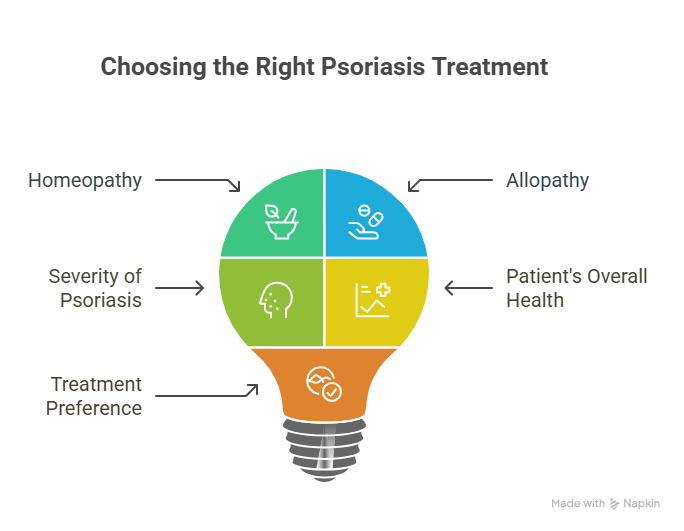
When considering which treatment is better for psoriasis, the choice between homeopathy and allopathy depends on various factors, including the severity of the psoriasis, the patient’s overall health, and their preference for natural versus conventional treatments.
For Mild Psoriasis:
- If you have mild psoriasis with small patches and no significant symptoms, homeopathy may offer a gentler, more holistic approach. Many people with mild psoriasis find relief from natural treatments without experiencing significant side effects.
- Topical treatments like corticosteroids, vitamin D analogues, and topical calcineurin inhibitors can also be effective for managing mild psoriasis and are commonly used in allopathy.
For Moderate to Severe Psoriasis:
- Allopathic treatments are typically recommended for moderate to severe psoriasis. Systemic medications and biologic therapies are more likely to provide the necessary relief for individuals with widespread psoriasis or psoriatic arthritis.
- Biologics have revolutionized the treatment of severe psoriasis, offering patients the potential for long-term remission and improved quality of life.
For Long-Term Management:
- For those seeking a long-term solution or those who want to avoid the side effects of steroids and other conventional drugs, homeopathy may be a viable option. However, this approach works best for people who have a mild to moderate condition and are open to ongoing treatment.
- In contrast, allopathic treatments are often more effective for immediate symptom relief and are commonly used in combination with other treatments, such as phototherapy or biologics, for long-term management.
Skin Psoriasis Treatment in Ludhiana
If you are living in or near Ludhiana and struggling with psoriasis, you may want to seek professional help from a dermatologist for the most effective treatment. Skin Psoriasis Treatment in Ludhiana can help you find the right balance between homeopathic and allopathic treatments, depending on your condition and preferences.
At The House of Skin, we offer comprehensive treatment options for psoriasis, including biologics, topical treatments, phototherapy, and homeopathic remedies. Our experienced dermatologists will assess your condition and recommend a personalized treatment plan designed to manage your psoriasis effectively and safely.
Conclusion: Which Treatment Is Better for Psoriasis, Homeopathy or Allopathy?
Both homeopathy vs allopathy for psoriasis offer unique advantages and have their place in managing this chronic condition. For mild psoriasis, homeopathy may provide a natural, long-term solution with fewer side effects. On the other hand, for moderate to severe psoriasis, allopathic treatments like biologics and systemic therapies are more likely to provide effective, rapid relief.
Ultimately, the best approach depends on the severity of your condition, your health goals, and your preferences. It’s important to consult a qualified dermatologist to determine which treatment is better for psoriasis in your specific case.
If you’re seeking Skin Psoriasis Treatment in Ludhiana, The House of Skin offers a variety of options tailored to your needs. Schedule a consultation today and start your journey toward clearer, healthier skin.

